HomeBusinessExpert Electrical Panel Installation Services for New Construction and Home Renovations

Expert Electrical Panel Installation Services for New Construction and Home Renovations

Published on

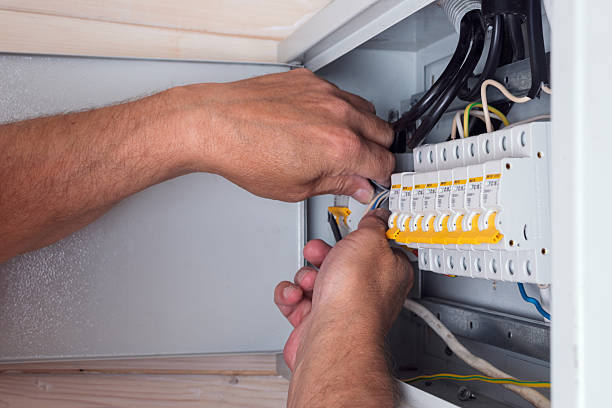
Every electrical system begins with the panel — the component that accepts power from the utility service entrance and distributes it across the circuits that serve every outlet, every fixture, and every appliance in the building. Getting the electrical panel installation right is the foundational decision of any electrical system, because the panel’s size, quality, and configuration determine the electrical capacity and safety protection available to the entire building for the life of the installation. Southaven Electrical Service installs electrical panels for new construction and home renovations with the expertise and code knowledge that this foundational component requires.

Panel Installation for New Home Construction

New home construction electrical panel installation in Southaven begins with a load calculation — a systematic assessment of the building’s anticipated electrical demand based on the size of the home, the heating and cooling system, the kitchen appliance configuration, and any specialty electrical loads the homeowner plans to connect. This load calculation determines the appropriate service size for the panel: whether 150 amp, 200 amp, or 400 amp service is appropriate for the home being built.

Beyond sizing, new construction panel installation involves selecting the panel brand and configuration that provides adequate circuit capacity for both current needs and reasonable future expansion — a 200-amp panel with 40 spaces, for example, provides both the amperage capacity and the circuit space for an active household without the cost of oversizing. Southaven Electrical Service guides new construction clients through these decisions and installs the selected panel to code compliance standards as part of the full electrical panel installation service.

Panel Installation for Home Renovations

Home renovations that add significant electrical load — kitchen remodels with new electric appliances, additions that add substantial new living space, garage conversions, or the addition of electric vehicle charging — sometimes require installing a subpanel to distribute power to the new area without overloading the main panel, or upgrading the main panel to support the renovation’s additional power demands. Southaven Electrical Service evaluates the renovation’s electrical implications and installs the panel configuration that best serves the expanded home.

Subpanel Installation

Subpanels are secondary panels fed from the main panel to distribute power to outbuildings, additions, or large sections of a home or commercial facility that benefit from localized circuit distribution. A garage workshop subpanel, a pool equipment subpanel, or a subpanel serving a large addition are common examples. Southaven Electrical Service installs subpanels correctly — with properly sized feeder conductors, appropriate grounding configuration, and correct circuit identification — as part of comprehensive electrical panel installation services.

Code-Compliant Installation With Proper Permitting

Panel installation in Southaven requires permits and inspection to verify code compliance — the inspection process is specifically designed to catch installation errors in a component as safety-critical as the electrical panel. Southaven Electrical Service manages the permitting and inspection process for all panel installations, ensuring full compliance and giving property owners the documentation that confirms their panel was professionally installed to current code standards.

The Right Panel, Installed Right

Whether you’re building a new home in Southaven or renovating an existing one, the electrical panel installation sets the foundation for every electrical system that follows. Southaven Electrical Service installs panels that are correctly sized, properly configured, and code-compliant — giving your home or project the electrical foundation it deserves. Contact us today to discuss your electrical panel installation project.

Latest articles

Shower Screen Installation: 7 Mistakes to Avoid in Your Bathroom

A new shower screen can make your bathroom look cleaner, brighter and more modern....

Car Wreckers Perth: How Heavy Tow Trucks Extract Vehicles from Tight WA Carports

Arranging to sell an inoperable, written-off, or unregistered car to an auto recycler is usually a straightforward decision. However, for thousands of property owners across Western Australia, an immediate logistical obstacle creates hesitation: the physical location of the dead car. Suburban living across the Perth metropolitan area features unique architectural layouts. From 1970s villas in Tuart Hill and narrow laneway townhouses in Subiaco to battle-axe rear blocks in Morley and modern subdivided properties across Baldivis, carports and driveways are often exceptionally tight. It is common for a scrap vehicle to sit wedged deep inside a low-clearance brick carport, parked nose-first against a garden wall, sunken on four flat tyres, or immobilized with a seized transmission and steering lock engaged. Vehicle owners often worry: How can a massive commercial recovery truck possibly extract a non-running car without scraping brick pillars, cracking exposed aggregate concrete, or clipping the gutters? As an established, fully licensed Car Wrecker Perth specialist, WA AUTO PARTS manages complex vehicle recoveries every day. Modern vehicle extraction does not rely on brute force; it requires specialized low-clearance equipment, mechanical rigging physics, and experienced operators. Below is an inside look at how professional auto recyclers safely extract non-running vehicles from Perth’s tightest carports without property damage. 1. The Challenges of Tight WA Carport Extractions Extracting a vehicle with a running engine and functional power steering is simple. Extracting a dead, immobilized car from an enclosed carport presents multiple physical hurdles: Low Overhead Clearance: Many older Perth carports, timber pergolas, and multi-unit basement garages have vertical height limits between 1.9 and 2.2 meters. A full-sized tilt-tray recovery truck cannot physically drive under these structures. Seized Drivelines and Broken Steering Locks: If a car has been stationary for months or years, the brake calipers often rust solid to the brake discs. Furthermore, missing ignition keys mean the steering wheel is permanently locked at an angle. Sharp 90-Degree Access Angles: Modern suburban infill developments often feature battle-axe driveways with tight right-angle turns, narrow brick boundaries, and low overhangs from neighboring trees. Delicate Ground Surfaces: Western Australian homes frequently feature decorative exposed aggregate, custom paving, or fragile limestone retaining walls that can crack under excessive axle weight or uncontrolled metal drag. 2. Specialized Rigging Gear: The Extraction Toolkit When you book vehicle removal with a premier Car Wrecker Perth operator like WA AUTO PARTS, our tilt-tray tow trucks arrive equipped with specialized extraction tools designed to negotiate tight spaces:  ➔  ➔    GoJak Wheel Dollies and Heavy-Duty Skates If a vehicle has seized brakes, flat tyres, or a locked transmission in "Park", dragging it across concrete causes rubber scuffing and high mechanical resistance. Technicians use mechanical ratcheting dollies (such as GoJaks) that slide around each tyre. Pumping the foot pedal lifts the tyre cleanly off the concrete. With all four wheels resting on 360-degree ball-bearing casters, an operator can physically spin a 1.8-tonne sedan sideways or guide it around brick carport pillars with minimal effort. Snatch Blocks and Directional Pulleys When a recovery truck cannot align straight with the carport opening, pulling the cable directly from the truck's winch could drag the vehicle into a structural pillar. Operators utilize heavy-duty snatch blocks (directional pulleys) anchored to temporary load-rated points or dead-man anchors. By running high-tensile synthetic winch lines through these pulleys, operators redirect the pulling force around corners, guiding the car smoothly out of the carport along a curved path. Low-Approach Angle Tilt-Trays Once the car is safely guided out onto the wider driveway or street, our hydraulic tilt-tray beds slide backward and drop down to create an ultra-low loading angle (typically 8 to 10 degrees). This low approach ensures lowered front bumpers, exhaust systems, and underbody components slide onto the truck deck without scraping. 3. Step-by-Step: The Professional Extraction Workflow Professional vehicle recovery is executed methodically to ensure absolute safety for your home and surrounding structures. Here is how our team at WA AUTO PARTS extracts an immobilized car from a tight space: Stage Operational Action Primary Safety Objective 1. Site Survey Technician assesses roof height, pillar clearance, and ground slope. Determines whether dollies, snatch blocks, or direct winch pull is required. 2. Mobilization Tyre skates or dollies are fitted to non-rolling or locked wheels. Prevents surface damage to decorative paving, tiles, or driveway aggregate. 3. Clearance Check Wing mirrors are folded in; path is cleared of bins and garden hoses. Maximizes lateral clearance between brick pillars and boundary fences. 4. Controlled Extraction Winch or manual maneuvering guides vehicle into open driveway space. Eliminates structural impact risks and maintains steady tension. 5. Bed Loading Vehicle is winched onto the hydraulic tilt-tray and chained at four points. Complies fully with National Transport Commission load restraint standards. 4. How Homeowners Can Prepare for a Seamless Extraction While our recovery drivers are trained to handle challenging extractions, property owners can take a few simple steps prior to the truck’s arrival to ensure a smooth, rapid pickup: Clear the Driveway Corridor: Move daily-driven family cars, trailers, wheelie bins, and children's bicycles out onto the street. Creating a straight, unobstructed path saves valuable time. Locate Keys (If Available): Even if the battery is completely dead, having the physical key allows our driver to unlock the steering column and shift the transmission into Neutral, speeding up the extraction. (If keys are lost, notify us beforehand so we bring dedicated wheel dollies). Trim Overhanging Foliage: If low tree branches or overgrown bushes line the narrow side of your carport, trimming them back prevents paint scuffs on your boundary and gives the driver clear visibility. Ensure Easy Gate Access: If the vehicle sits behind side gates or a security barrier, ensure gates are latched fully open and locks are cleared. 5. Why You Should Never Attempt DIY Extraction When faced with a vehicle stuck in a tight garage or carport, some owners attempt to extract it themselves using a neighbor’s 4WD, a tow strap, or a hardware store come-along winch. Attempting DIY extraction on an immobilized vehicle in an enclosed space carries severe risks: ...

SEO Beyond Google: Optimising Content for ChatGPT and AI Search

For most of the history of search marketing, the objective was easy to describe....

Guide to Cannabis Pre-Rolls in Bronxville

For cannabis consumers seeking convenience without sacrificing quality, ready-to-smoke products have revolutionized the modern...

More like this

SEO Beyond Google: Optimising Content for ChatGPT and AI Search

For most of the history of search marketing, the objective was easy to describe....

Gravel For Sale: How to Choose Between Crusher Run, #57, and #78 Stone

Gravel names can sound interchangeable until a project depends on the way each material...

The Ultimate Pre-Offer Inspection Checklist for Townhomes for Sale

Smart buyers do more than admire finishes before making an offer. A careful pre-offer...