Hyderabad reveals its character gradually rather than instantly. The city carries centuries of layered history, architectural heritage, and cultural refinement that quietly shape everyday life. Travellers often discover that its appeal lies not in a single monument but in the harmony between historic legacy and modern urban energy.
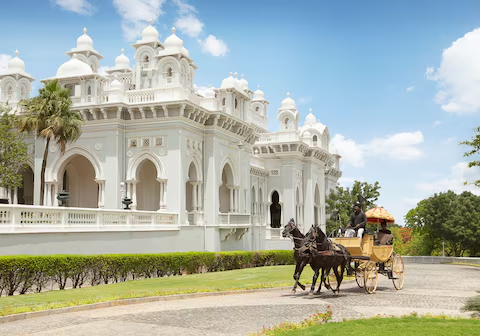
Among the landmarks that capture this heritage most vividly is the Taj Falaknuma Palace, a royal residence that overlooks the city from a hilltop and reflects the grandeur of the Nizam era. Founded in 1591 by Muhammad Quli Qutb Shah, Hyderabad was envisioned as a cultural and commercial centre of the Deccan. Over time, it evolved into a city where royal heritage, historic architecture, and enduring traditions exist alongside rapid economic growth.
The Origins and Historic Identity of Hyderabad
Hyderabad’s origins are closely tied to the Qutb Shahi dynasty, which established the city as a thriving center of culture and trade. The construction of Charminar marked the beginning of Hyderabad’s urban identity and remains one of its most recognizable landmarks today. Surrounded by lively bazaars, the monument reflects the social and commercial energy that has shaped the old city for centuries.
Nearby stands Golconda Fort, once one of the most powerful strongholds in southern India. The fort also served as a global center for diamond trading, giving Hyderabad an important role in early international commerce.
Royal Landmarks That Defined the Nizam Era
The era of the Nizams brought a remarkable period of architectural and cultural refinement to Hyderabad. Palaces, ceremonial halls, and administrative complexes built during this time reflect a blend of Persian, Mughal, and European influences. These structures illustrate the cosmopolitan outlook of the princely state and its sophisticated court culture.
Buildings from this period continue to provide insight into governance, royal ceremonies, and the lifestyle of one of India’s most influential dynasties.
Chowmahalla Palace: Seat of the Nizam’s Court
Chowmahalla Palace once functioned as the official residence and ceremonial seat of the Nizams of Hyderabad. Its expansive courtyards and grand halls hosted royal durbars, administrative gatherings, and celebrations. Today the palace offers visitors a glimpse into the governance and aristocratic life that once defined the city.
Golconda Fort: Engineering and Power in Stone
Golconda Fort remains one of the most impressive historical landmarks in the region. Built across granite hills, the structure features massive defensive walls, strategic gateways, and advanced acoustic systems. The fort demonstrates the engineering ingenuity and military planning that once protected the kingdom.
Qutb Shahi Tombs: The Legacy of the Dynasty
The Qutb Shahi Tombs form an important part of Hyderabad’s historical landscape. These domed structures serve as the resting places of the rulers of the Qutb Shahi dynasty. Their architecture combines Persian design with local craftsmanship, representing a distinctive style that influenced later Deccan architecture.
Taj Falaknuma Palace: Hyderabad’s Crown of Royal Grandeur
Taj Falaknuma Palace stands as one of Hyderabad’s most extraordinary heritage landmarks. Perched nearly 2,000 feet above the city, the palace was commissioned in the nineteenth century by Nawab Sir Viqar-ul-Umra and later became the residence of the Nizams. Its name translates to “Mirror of the Sky,” reflecting its elevated location and sweeping views across Hyderabad.
The palace represents a blend of Italian and Tudor architectural styles, with marble staircases, ornate ceilings, and extensive collections of art and manuscripts. Carefully restored in the early twenty-first century, it now offers visitors an opportunity to experience the elegance and refinement of Hyderabad’s royal past.
The Interiors and Craftsmanship of Taj Falaknuma
The interiors of the Taj Falaknuma Palace reveal the remarkable craftsmanship of its era. Grand halls, intricate chandeliers, and carefully designed ceilings reflect the influence of European design combined with traditional Indian elements. These interiors illustrate the luxury and sophistication associated with the Nizam’s court.
Elevated Views of the “City of Pearls”
The palace’s hilltop location provides one of the most remarkable views of Hyderabad. From its terraces, visitors can observe the contrast between historic neighborhoods and the expanding modern skyline. This vantage point highlights the city’s transformation while preserving its historic character.
Dining Experiences Within Royal Heritage
Today, Taj Falaknuma Palace offers dining experiences that combine heritage with culinary tradition. Restaurants such as Gol Bungalow allow guests to enjoy classic Hyderabadi cuisine while overlooking the “City of Pearls.” The terrace itself once hosted royal receptions and continues to be one of the palace’s most memorable experiences.
The Culinary Traditions That Define Hyderabad
Cuisine plays a central role in Hyderabad’s cultural identity. Many of the city’s famous dishes originated in the royal kitchens of the Nizams, where Persian, Mughlai, and Deccan influences blended to create distinctive culinary traditions. These recipes continue to define Hyderabad’s food culture today.
Hyderabadi Biryani: The City’s Signature Dish
Hyderabadi biryani represents the essence of the region’s culinary heritage. The dum cooking method allows rice and marinated meat to cook slowly together, producing layered flavors and aromas. This technique reflects the patience and skill embedded in Hyderabad’s traditional cooking.
Haleem and Seasonal Specialties
Haleem holds particular cultural significance in Hyderabad, especially during Ramadan. The dish is prepared by slowly cooking wheat, lentils, and meat until it reaches a smooth texture. Its preparation requires hours of careful stirring, making it both a culinary and cultural tradition.
Traditional Desserts of the Deccan
Desserts such as qubani ka meetha highlight the sweet side of Hyderabad’s cuisine. Made with dried apricots and often served with cream or custard, the dish reflects Persian influences on local cooking. These desserts illustrate the balance of flavors that defines Hyderabadi food culture.
Why Hyderabad Tourism Continues to Inspire Travelers
Hyderabad tourism continues to resonate because the city offers more than individual attractions. Visitors encounter a destination where architecture, cuisine, and cultural traditions combine to create a layered travel experience. History remains visible in everyday life rather than being confined to monuments.
This harmony between heritage and modern growth ensures that Hyderabad remains one of India’s most distinctive and enduring travel destinations. For travellers planning a visit, platforms such as Goibibo and MakeMyTrip make exploring the city easier by offering convenient booking options, travel packages, and curated itineraries. These platforms help visitors discover Hyderabad’s historic landmarks, culinary heritage, and vibrant neighbourhoods with greater ease.